

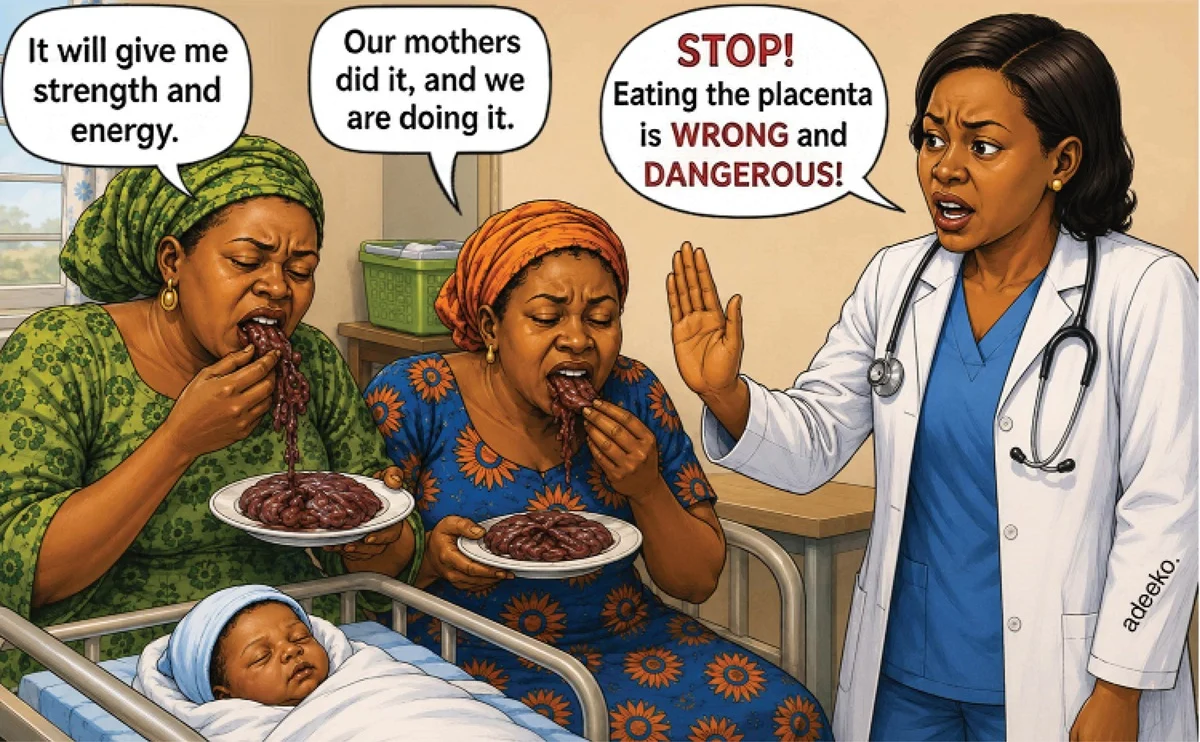
In many cultures, the placenta is more than tissue left over after birth. It is understood as spiritually linked to the baby, treated as a companion or sibling, and buried to protect the child or connect them to family and ancestral land.
Yet in many maternity settings, what happens to the placenta after birth may receive little discussion unless a woman already knows she can ask to take it home.
For Mrs Adekemi Diran, a mother of two, the placentas from her first two deliveries were handed to her husband to dispose of as he wished. However, when she had her third baby in the United Kingdom, the issue of placenta disposal was not even raised with her.
“They were supposed to ask me about these things. If they had asked, I would have explained,” she later said.
Instead, she was left with a sense of loss and grieved the
This post was originally published on this site.