

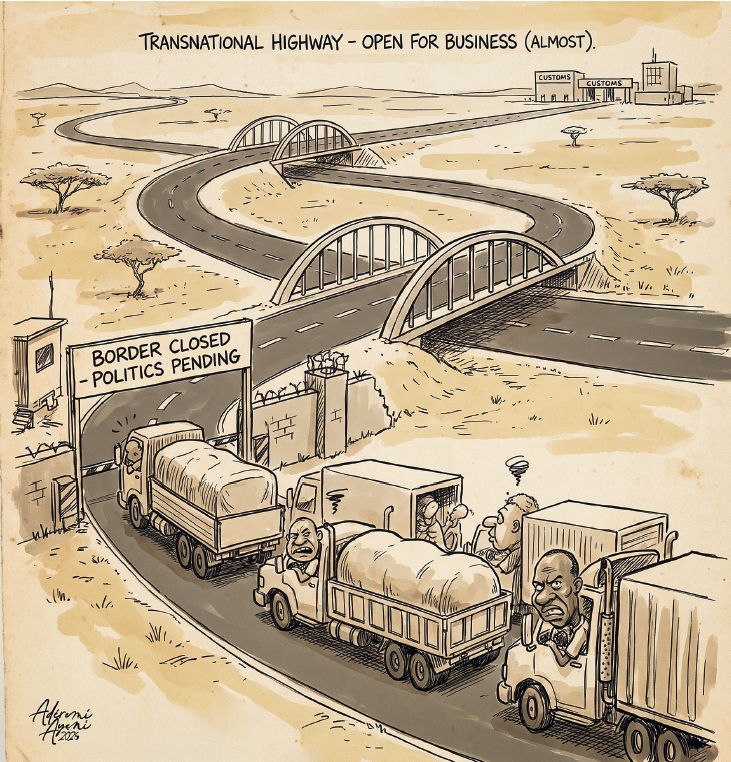
For decades, African leaders have argued that the greatest obstacle to the continent’s economic integration is inadequate infrastructure. Roads that stop at borders, inefficient ports, fragmented rail networks and unreliable electricity have all been blamed for limiting trade and investment. That thinking has shaped billions of dollars in public investment, from the African Continental Free Trade Area (AfCFTA) to the Programme for Infrastructure Development in Africa (PIDA). While this argument is broadly correct, it obscures the extent to which political fragmentation, interstate relations and domestic political choices now shape the success or failure of continental integration.
Across the continent, many of the physical barriers to integration are gradually being dismantled, while political barriers continue to multiply. Border disputes persist. Military coups have fractured regional blocs. Anti-migrant sentiment is becoming more visible, while diplomatic mistrust continues to deepen. Governments that publicly champion African unity are pursuing domestic policies that undermine it.
This post was originally published on this site.